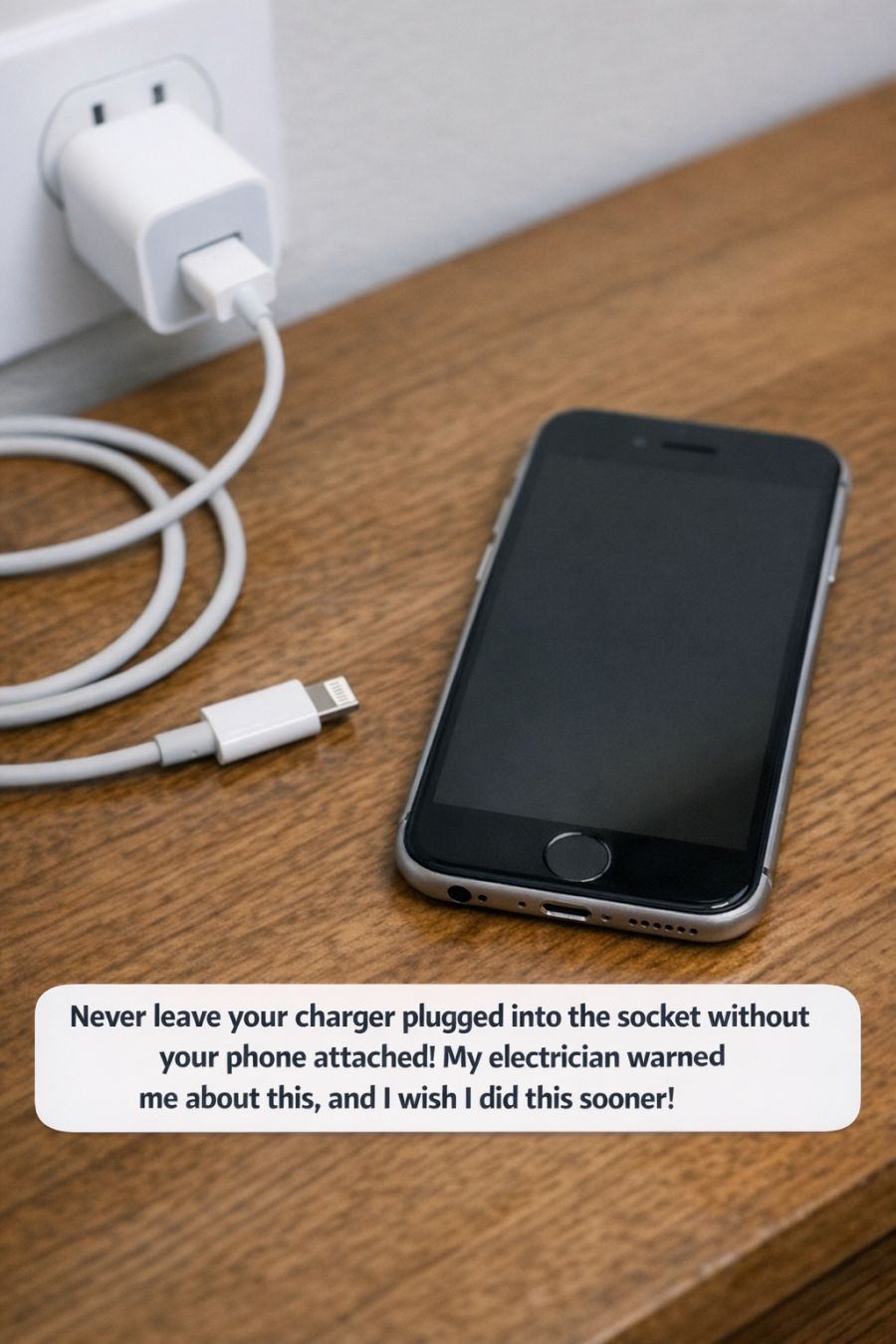
Never leave your charger plugged into the socket without your phone attached! My electrician warned me about this, and I wish I did this sooner!

Smart plugs offer a convenient solution to managing your chargers’ power consumption. These devices allow you to control power to your outlets remotely via a smartphone app, making it easy to turn off chargers when not in use. Some smart plugs also offer scheduling features, allowing you to automatically cut power during certain times of the day.
Investing in high-quality chargers with built-in safety features, such as overcharge protection, can also minimize risks. These chargers stop drawing power once the connected device is fully charged, reducing energy waste and preventing battery damage.
10. What Electricians Check When They Inspect Your Chargers
When inspecting chargers, electricians look for signs of wear and damage such as frayed cords, discolored plugs, and loose connections. They also check for overheating issues by examining the charger’s surface and its surrounding area for signs of heat damage.
Electricians may use specialized tools to measure the charger’s power draw, ensuring it is within safe limits. They also assess the condition of the outlets and wiring to ensure they can safely handle the charger’s electrical load. Regular inspections by a qualified electrician can help identify potential hazards before they become serious issues.
11. The One Change I Made After My Electrician’s Warning
After my electrician highlighted the risks associated with leaving chargers plugged in, I made a conscious effort to unplug them when not in use. This small change has led to noticeable improvements in my energy consumption and peace of mind.
Not only have I observed a slight reduction in my electricity bill, but I also feel more secure knowing that I’ve minimized potential fire hazards in my home. This experience has taught me the importance of being mindful of my energy habits and the impact they can have on both my finances and safety.